
Proven, Precise, and Still the Right Tool for Many Cases
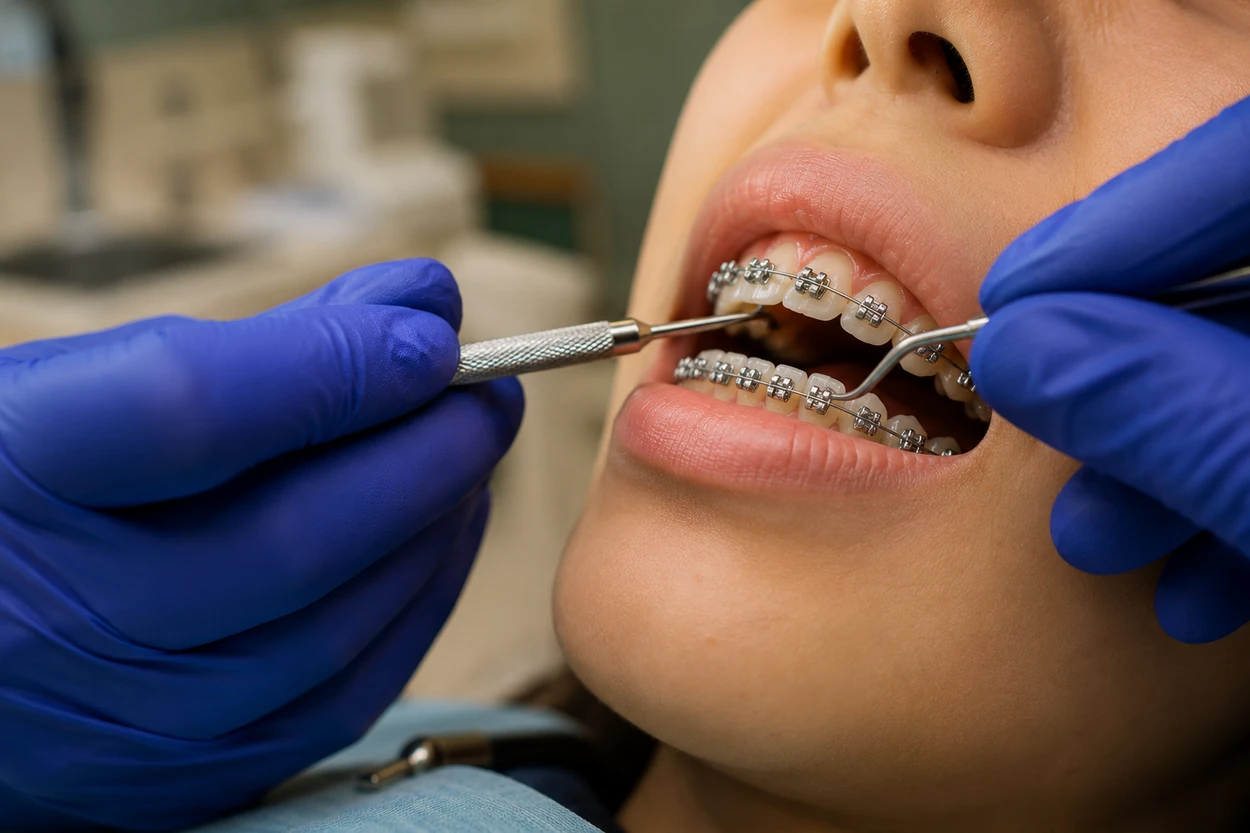
Braces, or fixed appliances, remain one of the most effective and dependable ways to move teeth, and for some cases, they're simply the better instrument. When a bite is complex, or teeth need to be rotated or moved in ways aligners struggle with, fixed appliances give the orthodontist a degree of control that's hard to match. The braces themselves have come a long way: smaller, smoother, and more comfortable than the ones you may remember.
As braces are bonded to your teeth throughout treatment, they deliver steady, predictable force exactly where it's needed. For certain cases involving a skeletal discrepancy, where the issue is the jaws themselves, not just the teeth, we may add functional appliances or expanders to influence skeletal growth, particularly in patients who are still developing. That's a level of correction simple alignment can't achieve on its own.
Braces are often the right choice for:
- Crowding or spacing that needs substantial correction
- Overbite, underbite, or crossbite
- Teeth that are rotated or badly out of position
- Complex cases where predictability matters most
- Younger patients for whom remembering to wear aligners is a gamble
The braces are bonded in a single comfortable visit, no needles, and no drilling, followed by short periodic adjustments as your teeth move into place. There's a few days of adjustment after placement; over-the-counter relief and soft foods handle it easily. For our braces patients, we do have guidelines as to what foods to watch out for. Dislodging brackets does happen, and excessive breakage could increase your treatment time. Moreover, keeping everything clean is one of the biggest factors in maintaining your oral health throughout treatment and finishing on time with a healthy and beautiful result.
Braces or aligners — how we decide
It depends on your case, not on what's trendy. Some bites are handled beautifully either way, and then it comes down to preference. Others genuinely call for one approach, and we'll tell you which and why rather than letting you choose blind. Bonding brackets is the easy part, knowing where to place each one and how to sequence the movements is the craft, and that planning is what orthodontic specialty training exists to do.
Want to know if braces are right for your case?